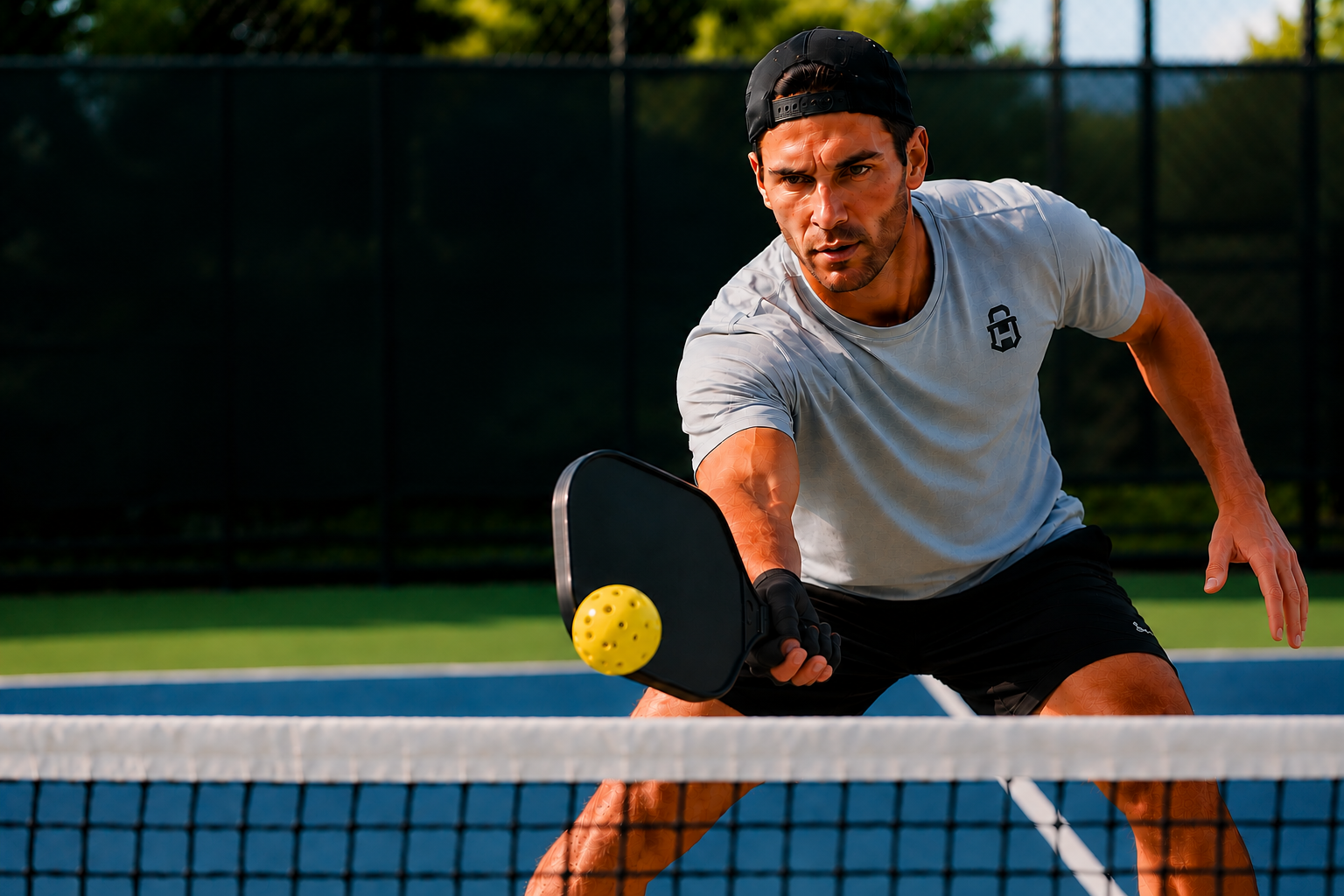
If you’ve spent any time on a pickleball court, you already know this truth: most points aren’t won, they’re lost. Specifically, they’re handed away through unforced errors. Balls hit into the net, shots sailed long, rushed decisions under no pressure, these are the silent destroyers of otherwise solid games.
Reducing unforced errors isn’t about playing safer or becoming passive. Instead, it’s about tightening execution, improving decision-making, and maintaining control under routine conditions. With that in mind, here’s how to systematically eliminate these mistakes and elevate your consistency.
REdefine your default shot
One of the biggest sources of unforced errors is over-ambition. Players often attempt low-percentage shots when a high-percentage option is available.
Your default shot should:
- Clear the net comfortably (by 2–3 feet)
- Land deep or safely within margins
- Avoid sidelines unless necessary
In other words, think in terms of repeatability, not highlight plays. If a shot isn’t working at least 8 out of 10 times in practice, it shouldn’t be your go-to in a match.
Master net clearance and margin
The net is the most common destination for unforced errors. Fortunately, the fix is mechanical and strategic.
Focus on:
- Higher net clearance: Aim to pass well above the tape, especially on dinks and resets
- Controlled trajectory: Use topspin where appropriate to keep balls in while still clearing the net
- Targeting the middle: The center of the court offers the largest margin for error
Players often aim too precisely. As a result, precision increases risk. Margin reduces it.
Slow the game down (when needed)
Unforced errors spike when tempo exceeds control. Many players rush shots unnecessarily, especially during neutral rallies.
To regain control, you can:
- Using softer shots (dinks, resets) to neutralize pace
- Taking an extra fraction of a second to set your feet
- Prioritizing placement over power
Ultimately, controlled tempo forces your opponent to generate offense, often leading them to make the error instead.
improve footwork and positioning
Poor positioning leads to poor contact, and poor contact leads to errors.
For example, strong fundamentals for footwork include:
- Stay balanced before every shot
- Avoid hitting while moving laterally at full speed
- Recover quickly to a neutral position after each shot
In many cases, most “mystery errors” are actually footwork errors in disguise.
Eliminate “Dead Paddle” Moments
Grip inconsistency is an overlooked contributor to unforced errors. If your paddle face is unstable at contact, even simple shots can go off-target.
Because of this, equipment and grip support matter. A more secure, consistent hold allows you to:
- Maintain paddle angle through contact
- Reduce mishits under pressure
- Execute softer touch shots without overcompensating
For players who struggle with grip fatigue or control, our unique HandLok adaptive device is designed to stabilize the paddle without requiring constant squeezing, helping reduce variability from shot to shot.
commit to shot decisions early
Indecision is a major driver of unforced errors. Half-committed swings, last-second changes, or hesitation at the net often result in mishits.
To avoid this, train yourself to:
- Decide before the ball arrives
- Trust your selection
- Execute with full commitment
After all, even a suboptimal decision executed cleanly is usually better than a perfect idea executed poorly.
Practice with Constraints
You don’t fix unforced errors by playing more games, you fix them with intentional practice.
For instance, try:
- Target drills: Aim for large, safe zones rather than lines
- Consistency challenges: 20+ shot rallies without an error
- Error tracking: Identify patterns (net, long, wide, mishit) and address them directly
Simply put, what gets measured gets improved.
Manage Mental Drift
Many unforced errors happen not because of skill, but because of lapses in focus.
Between points:
- Reset your mindset
- Use a simple cue (e.g., “high margin,” “smooth contact”)
- Stay present, avoid thinking ahead or dwelling on past mistakes
At the same time, remember that consistency is as much mental discipline as it is technical execution.
Bottom line
Reducing unforced errors is the fastest way to improve your win rate. It doesn’t require new shots or advanced techniques, just sharper fundamentals, smarter decisions, and more disciplined execution.
Work on eliminating these errors, and you’ll immediately become a more difficult player to beat.